The 2026 World Cup final pitch: what was under the grass and what it teaches about watering a lawn
The 2026 World Cup final was played on real Bermudagrass laid over sand with automatic irrigation. Which grass it was, how much water it needs compared with a cool-season lawn, and what is worth copying at home.
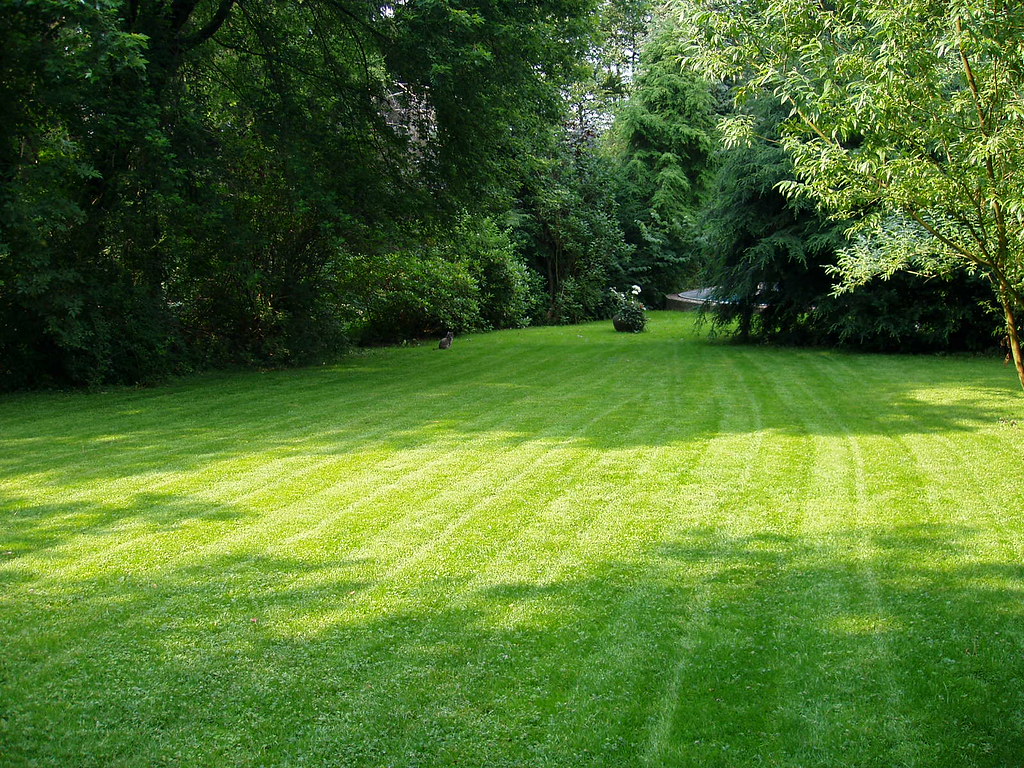
Real grass, grown in North Carolina
The 2026 World Cup final, played on July 19 at MetLife Stadium in East Rutherford, New Jersey, was played on natural grass. The stadium is home to the NFL's Giants and Jets and normally has a synthetic surface. FIFA requires natural grass for tournament matches, so the turf was covered over. The pitch laid in early May was Tahoma 31 Bermudagrass, grown for about ten months by Carolina Green, a sod farm near Charlotte, and delivered in roughly twenty truckloads.
That was the backup. The sod was originally meant to come from a New Jersey farm, but a snowy winter left it unusable. FIFA had grown spare grass at 11 farms across the US, Mexico and Canada for exactly that kind of problem. The same pitch hosted eight matches, from the first game on June 13 to the final.
Bermudagrass in the warm venues, bluegrass and ryegrass in the cool ones
Bermudagrass is a warm-season grass, the same one that covers lawns and golf courses across the American South. It grows in the heat and goes dormant and brown when temperatures drop in winter. FIFA used it in the warmer host cities. In cooler venues and under roofs it used cool-season grasses instead: Kentucky bluegrass with perennial ryegrass.
The research behind those choices was led by the University of Tennessee with Michigan State. Their trials settled on a mix of 84% Kentucky bluegrass and 16% perennial ryegrass. Ryegrass germinates quickly and holds the soil while the slower bluegrass establishes; four months after seeding, that sod was stronger than bluegrass on its own. It is grown on plastic sheeting about two inches thick, so it can be lifted and trucked without tearing the roots.

What was under the grass
On top of the stadium's synthetic base the crew laid a sand root zone, reported at somewhere between 18 inches and two feet deep. It carries drainage, a fully automatic irrigation system and a vacuum ventilation system that moves air under the surface to manage root-zone moisture and temperature. Machines on the field also blow warm air when it is cold and cool air when it is hot. Synthetic fibers are stitched into the sod: in stitched hybrid systems they make up less than 5% of the surface and act as reinforcement, because the roots wrap around them and the turf holds up better to slides and sharp turns.
In the roofed stadiums the main problem is light. There the grass lives under LED grow lights: Dallas has 18 rigs hung from the roof, other covered venues use nine to twelve wheeled rigs that are moved around the field.
One detail is about water. In summer 2025 the same stadium hosted the Club World Cup on a pitch installed without an automatic irrigation system. For the 2026 World Cup, irrigation was built in from the start.
Stadium sand versus the soil in your yard
Sports fields are built on sand because it drains fast and resists compaction, so play can go on after a storm. The trade-off is that sand holds little water, so a sand-based pitch needs frequent, short watering. Home lawns are often the opposite. Clay soil takes in water at around half an inch (12 mm) per hour, while a fixed spray head puts down about 1.6 inches (40 mm) per hour. After a few minutes the extra water runs off, and the fix is to split the run time into several short cycles with a soak in between. Sandy soil absorbs about 2 inches (50 mm) per hour, and the risk there is water draining below the roots.
So a stadium's watering schedule is not something to copy. The method is: start from the soil you have and set run times and frequency for that soil. Run times for sand, loam and clay are in How long to run sprinklers: minutes per cycle by soil and head type, with the math behind them.
How much water Bermudagrass needs compared with a cool-season lawn
Warm-season grasses use less water than cool-season ones. University of California turfgrass guidance uses an average annual crop coefficient of 0.8 for cool-season turf and 0.6 for warm-season turf, and puts warm-season water use at about 20% less over the growing season.
Here is the same comparison with the values SprinklerMap uses. A cool-season lawn in full sun loses about 0.2 inches (5 mm) of water a day at the summer peak; for Bermudagrass we use 0.14 inches (3.5 mm). On 1,000 sq ft, with an overall system efficiency of 0.72, the cool-season lawn needs about 170 gallons a day and the Bermudagrass about 120. That is roughly 50 gallons less on every hot day.
The price is paid in winter, when Bermudagrass sits straw-colored for months; the farther north you are, the longer that lasts, and in cold climates it is not a practical lawn at all. If you live in a warm, sunny area and can live with a tan lawn from late fall to spring, a warm-season grass makes sense. If you want green all year, you stay with cool-season grasses, and among those tall fescue gets by on less water than ryegrass. We compare the seed types in Choosing lawn seed by sun, water and wear: species, labels and mixes.
| Lawn (1,000 sq ft, full sun, summer peak) | Daily water loss | Water to apply per day |
|---|---|---|
| Cool-season mix | 0.2 in (5 mm) | about 170 gallons |
| Bermudagrass | 0.14 in (3.5 mm) | about 120 gallons |
The cutting height is not as low as it looks on TV
On television the pitch looks shaved. The rules say otherwise: in UEFA competitions the grass may not exceed 30 mm (about 1.2 inches) and must be cut to the same height across the whole field, and the Premier League caps it at 27 mm. That is roughly an inch, kept there with daily mowing and sharp blades.
At home the more useful rule is to never remove more than one third of the leaf in a single mowing. If you mow once a week, holding a lawn at a stadium's one inch means taking off far more than a third every time. A higher cut leaves more leaf and goes with deeper roots, which reach water lower in the soil and carry the lawn better between waterings.
Stripes and an even green
The light and dark stripes have nothing to do with the grass species. A roller bends the blades one way, and light reflects differently depending on which direction you look from; we explain it for tennis courts in What grass does Wimbledon use, and how do they water it?. A mower with a rear roller will stripe a home lawn too.
An even green depends a lot on how evenly the water lands. At Lincoln Financial Field in Philadelphia, another tournament venue, the grounds crew tracks 50 separate areas of the same pitch. In a yard the equivalent check is a catch-cup test: set cups across the lawn, run one zone and measure how much water ends up in each. The yellow patches almost always match the emptiest cups. How to run it and read the results: The catch-cup test: measure sprinkler uniformity and your real inches per hour.
Recommended products
These product links are affiliate links: if you buy on Amazon or AliExpress through them it costs you nothing extra, but it helps us keep SprinklerMap alive as a project and create new useful content.
These products are catalogued in our brand database, with the same description and price range you find on the manufacturer page.

| Model | Type | Description | Radius (m) | Price (€) | Buy |
|---|---|---|---|---|---|
| 🌱 Royal Sport | Seeds | Mixture for turf under intensive use. Designed for fast recovery, foot traffic and more frequent maintenance. | — | €90-180 | Amazon |
Other suggested products
Products not in the brand catalogue: generic material, tools and accessories where the right size matters more than the brand.
| Product | Description | Price (€) | Buy |
|---|---|---|---|
| Hard-wearing lawn seed (family blend) | A hard-wearing grass seed mix built to take foot traffic from kids and pets, a realistic and sustainable alternative to stadium Bermudagrass. | ~€15-45 | Amazon |
| Cylinder mower with rear roller | A cylinder (reel) mower with a rear roller, the same mechanism used on tournament grounds to produce stripes and a dense finish, without cutting dangerously low. | ~€120-400 | Amazon |
| Irrigation controller with rain skip | A tap timer or controller to tune watering to your soil and skip cycles after rain, far more useful in a real garden than any stadium system. | ~€20-70 | Amazon |
| Manual lawn aerator / scarifier | A rolling aerator with blades to break up soil compaction on worn paths, basic care that matters more than any tournament cultivar. | ~€20-55 | Amazon |
| Product | Description | Price (€) | Buy |
|---|---|---|---|
| Zigbee/WiFi soil moisture sensor | Wireless in-ground probe reporting soil moisture and temperature in-app. With Home Assistant or Zigbee2MQTT it becomes the trigger to skip pointless cycles. | ~€8-20 | AliExpress |